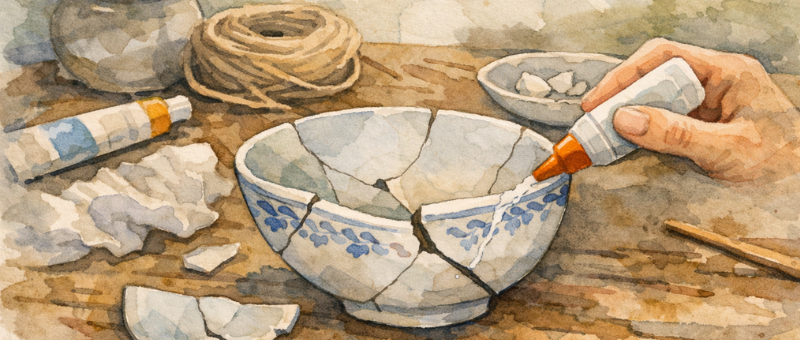
Repair at Work: Why It Matters More Than Resolution
Most workplaces say they want conflict resolved. What they usually mean is: Can we please stop talking about this so everyone can get back to work?
That instinct is understandable. Conflict is uncomfortable. It slows things down. It introduces emotion into places that prefer spreadsheets and calendars. So we rush toward resolution, agreements, action items, and next steps.
And yet, many organizations are full of “resolved” conflicts that quietly continue to shape behavior long after the meeting ends.
That’s where repair comes in.
Resolution Isn’t the Same as Repair
Resolution focuses on outcomes. Repair focuses on relationship.
Resolution asks:
What decision did we land on?
What are we doing next?
Who owns what?
Repair asks:
What happened between us?
What meaning did people make of it?
What trust was strained, even if unintentionally?
You can resolve a conflict without repairing the relational fabric it damaged. When that happens, people comply, but they do not re-engage. They agree, but they do not feel settled. They move on, but they carry something with them. Repair is what allows people to actually come back into relationship, not just back to work.
What Repair Looks Like at Work
Repair does not require a tearful group hug or a three-hour processing circle. In fact, at work, it is often quiet and understated. Repair might look like:
Naming that something landed harder than intended
Acknowledging impact without defending intent
Clarifying a misunderstanding that was never revisited
Taking responsibility for a misstep, even if it felt small at the time
Creating space for someone to say, “That stuck with me”
Repair says: something happened here, and it matters enough to tend to.
How to Initiate a Repair Conversation When You’re In It
If you are directly involved in a conflict, repair often starts with a small act of courage and a willingness to be a little uncomfortable.
A few practical tips:
1. Start with impact, not intention.
Instead of explaining what you meant, begin with curiosity about how it landed.
“I’ve been thinking about our last conversation, and I’m wondering how it landed for you.”
2. Name what feels unfinished.
You do not need perfect language. You just need honesty.
“Something about that interaction has stayed with me, and I don’t want to ignore it.”
3. Take responsibility for your part, even if it feels minor.
Repair does not require taking all the blame. It requires taking your share.
“I see now how my tone may have come across as dismissive.”
4. Resist the urge to fix it immediately.
Repair is often about listening more than solving.
“I’m not trying to change your perspective. I want to understand it.”
5. Know when to pause.
If emotions spike or defensiveness takes over, it is okay to slow things down.
“I think this matters, and I want to come back to it when we can both stay present.”
Repair is not about winning the conversation. It is about restoring enough trust that work can continue without strain.
How Leaders Can Coach Repair Without Playing Referee
For leaders, repair is less about stepping in to solve and more about creating conditions where people can do it themselves. Here are some ways to support that process.
1. Normalize repair as part of work.
When leaders name that tension and missteps are expected, people are more willing to address them.
“It’s normal for things to get strained sometimes. What matters is how we tend to it.”
2. Help people separate impact from intent.
Many conflicts escalate because people feel misunderstood or accused.
“Let’s focus on what landed for each of you, not what anyone meant.”
3. Slow the conversation down.
Speed often favors the most confident speaker, not the most accurate understanding.
“Let’s pause and make sure everyone feels heard before we move to solutions.”
4. Coach responsibility without assigning blame.
You can invite accountability without deciding who is right.
“What’s one thing each of you could take responsibility for here?”
5. Watch for systems issues hiding inside interpersonal conflict.
Recurring conflict often points to unclear roles, competing priorities, or missing processes.
“I’m noticing this keeps coming up. What might the system be contributing to this?”
When leaders model these practices, they send a clear message: repair is not a failure. It is part of how we work.
Repair Is an Efficiency Strategy, Not a Soft Skill
Here’s the part that often surprises leaders: repair is not just about being kind. It is about keeping organizations functional. Unrepaired conflict shows up as:
Passive resistance
Overly cautious communication
Repeated misunderstandings
Decision paralysis
Turnover that feels sudden but isn’t
Repair restores trust, and trust is what allows work to move faster with less friction. Teams that know repair is possible take more risks, speak more honestly, and recover more quickly when things go sideways. In other words, repair saves time.
Repair Is a Practice, Not an Event
One of the most important shifts organizations can make is moving away from the idea that repair happens only when something has gone very wrong. In healthy workplaces, repair is ongoing. It happens in small moments, early and often. A quick check-in. A follow-up conversation. A willingness to revisit something that felt unfinished.
When repair is normalized, conflict becomes less frightening. People trust that if something gets strained, it can be addressed. That trust alone changes behavior.
Why Repair Matters More Than Resolution
Resolution gives you an answer.
Repair gives you a relationship that can keep working.
Most organizations do not fail because they lack solutions. They struggle because trust erodes quietly, conversation by conversation, moment by moment, without being repaired. When leaders and teams learn to value repair, they stop asking only, “How do we move on?” and start asking, “What needs tending here before we do?” That question, asked sincerely and acted on consistently, changes everything.